Skip to content
ContentBuffer
ContentBuffer
August 6, 2026·~4 min read
ContentBuffer

ContentBuffer

Welcome, Tech Leaders.

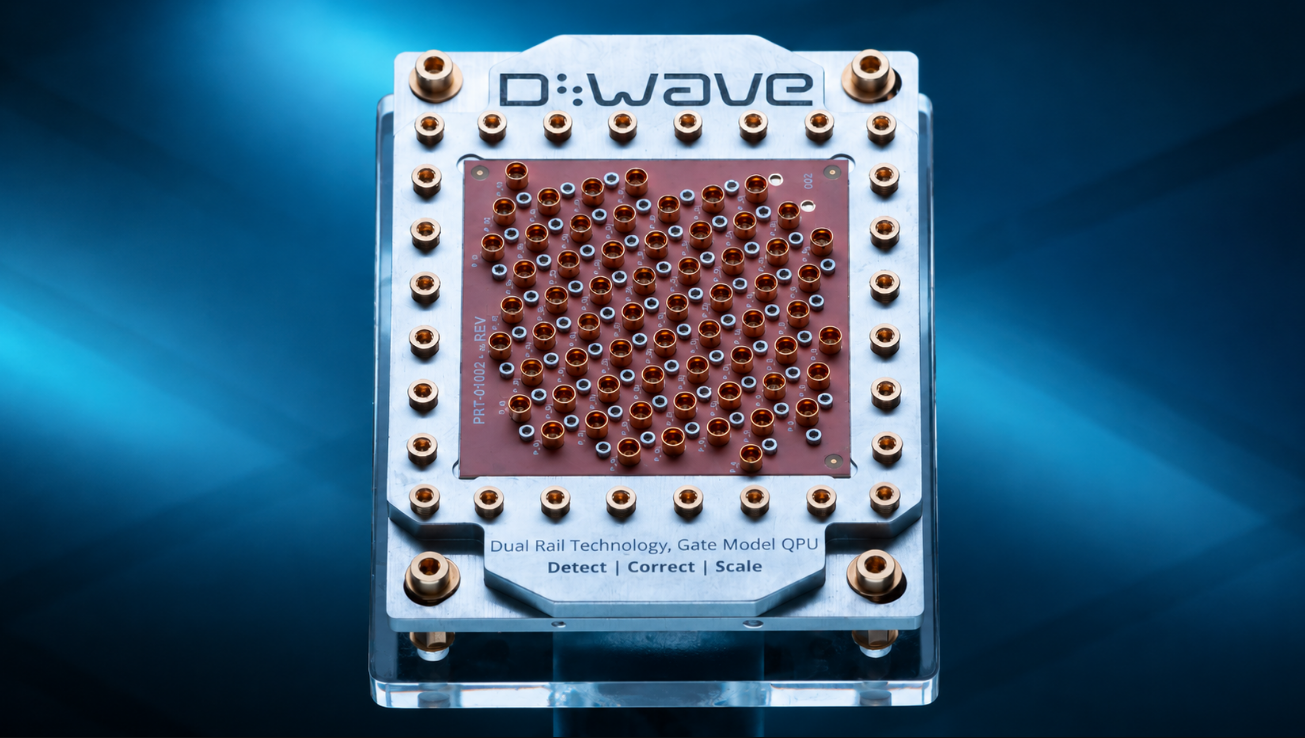
D-Wave has published groundbreaking research focusing on dual-rail qubit gates for quantum error correction, unveiling a new quantum encryption technique that cannot be replicated. For developers working with sensitive data, this advancement means enhanced security against breaches and unauthorized access. The method leverages the unique properties of quantum mechanics to ensure that any attempt at copying encrypted information results in immediate detection. Published on August 5, 2026, D-Wave's research is a critical step towards more secure and reliable quantum computing systems.

Researchers discovered that corals generate small vortices using hairlike structures called cilia to circulate oxygen, especially important during nighttime when algae can't photosynthesize. This finding is significant for marine biologists studying the impact of warming oceans on coral survival and bleaching events. The team used fluorescent nanoparticles and high-speed cameras to track how corals interact with their water boundary layer, revealing that faster cilia movement correlates with higher temperatures and stress. Let's dive deeper…

In today's ContentBuffer update:

  • MIT Unveils Stable, Large-Area Superconducting Material for Quantum Devices

  • Researchers unveil new wafer-scale technique for niobium diselenide, enabling ultra-compact quantum devices.

  • Qarakal Quantum's Pangaea: The Future of Modular Quantum Computing

  • Quantum Leap: NVision Secures €110M for Quantum Breakthroughs

  • 5 new AI tools & 5 new AI jobs

  • More tech news

Latest Development

Security
D-Wave Publishes Quantum Error Correction Research

Image source: thequantuminsider.com

Summary: D-Wave published research on dual-rail qubit gates for quantum error correction, introducing un-copyable encryption. This matters for anyone handling sensitive data in quantum applications.

Key Points:

  • D-Wave's research focuses on dual-rail qubit gates for quantum error correction, published August 5, 2026.

  • The new quantum encryption method prevents copying and ensures secure data transmission without compromise.

  • Quantum Business unveiled the Pangaea architecture for modular computing, aiming to enhance flexibility in quantum systems.

  • Qarakal Quantum developed a system for modular quantum computing, offering alternatives in scalable architectures.

  • Both D-Wave's research and new architectures aim to improve security and efficiency in quantum computing.

Why it matters: If you're working with sensitive data in quantum applications, the un-copyable encryption method from D-Wave is a game changer. It ensures that any attempt at unauthorized access or copying of encrypted information will be detected immediately. This technology flips the security paradigm for developers and organizations handling critical data.

Marine Biology
Corals Spin Vortices for Oxygen at Night

Image source: www.quantamagazine.org

Summary: Corals spin vortices at night for oxygen using tiny hair-like structures called cilia. This mechanism could signal coral stress in warming waters.

Key Points:

  • Corals generate vortices by waving their cilia, creating fast-moving flows of oxygenated water around them.

  • At night, corals rely solely on surrounding water for oxygen; during the day, symbiotic algae provide plenty of it.

  • Warmer water carries less oxygen, prompting corals to move their cilia faster to circulate what little oxygen is available.

  • Above a certain temperature, corals' ability to generate vortices starts working against itself, leading to potential suffocation.

  • An international team used fluorescent nanoparticles and high-speed cameras to track the movement of oxygen concentrations.

Why it matters: Marine biologists studying coral bleaching events now have a clearer understanding of how corals interact with their environment. This research reveals that cilia activity could serve as an early warning system for stress in warming waters, impacting conservation efforts and reef management strategies.

Hardware-advancements
MIT Develops Wafer-Scale Superconducting Material

Image source: news.mit.edu

Summary: MIT researchers developed a technique to produce wafer-scale samples of ultrathin superconducting materials like niobium diselenide. This could lead to smaller, more efficient quantum computing hardware and devices.

Key Points:

  • Researchers from MIT generated an inch-sized layer of niobium diselenide using graphene as a protective layer.

  • The technique involves depositing chemical precursors on silicon dioxide substrate before adding the graphene layer.

  • Graphene allows the precursors to move freely, forming a uniform monolayer over large areas.

  • Niobium diselenide has high kinetic inductance, enabling it to store more energy in smaller spaces.

  • This breakthrough could lead to more compact and efficient quantum computing hardware.

Why it matters: If you're working on superconducting quantum devices or ultrasensitive detectors, this is a game-changer. The new technique allows for the production of large, uniform areas of niobium diselenide without degradation in air. This could enable smaller, more efficient circuits and hardware, making quantum computing more accessible.

Material-science
New Technique Produces Inch-Sized Wafer of Niobium Diselenide

Image source: news.mit.edu

Summary: Researchers have developed a new method to produce large sheets of niobium diselenide, enabling more compact and efficient quantum devices. This could be a game changer for teams working on superconducting quantum computing hardware.

Key Points:

  • The technique allows researchers to generate perfectly smooth layers of niobium diselenide over an inch in size (25mm+).

  • Graphene protects the material from ambient oxidation, ensuring uniform growth and stability.

  • Niobium diselenide has a high kinetic inductance, enabling it to store energy efficiently in small areas.

  • The new method could lead to more compact quantum computing hardware and ultrasensitive detectors for communications or cosmology.

  • This research was published today in the journal Nature.

Why it matters: If you're working on superconducting quantum circuits, this is a big deal. The ability to produce large, uniform sheets of niobium diselenide could reduce the size and cost of quantum computing hardware significantly. For instance, using this material can replace large electronic junctions with tiny pieces of thin-film material, making circuits more compact and efficient.

Modular-architecture
Quantum Business Qarakal Quantum Unveils Pangaea Modular Architecture

Image source: thequantuminsider.com

Summary: Quantum Business Qarakal Quantum unveiled the Pangaea modular quantum computing architecture, improving stability and scalability for researchers and developers. This is a big deal for anyone working on nuclear particle transport prediction or high-precision fields.

Key Points:

  • Pangaea architecture supports integration of multiple quantum processors, enabling scalable applications

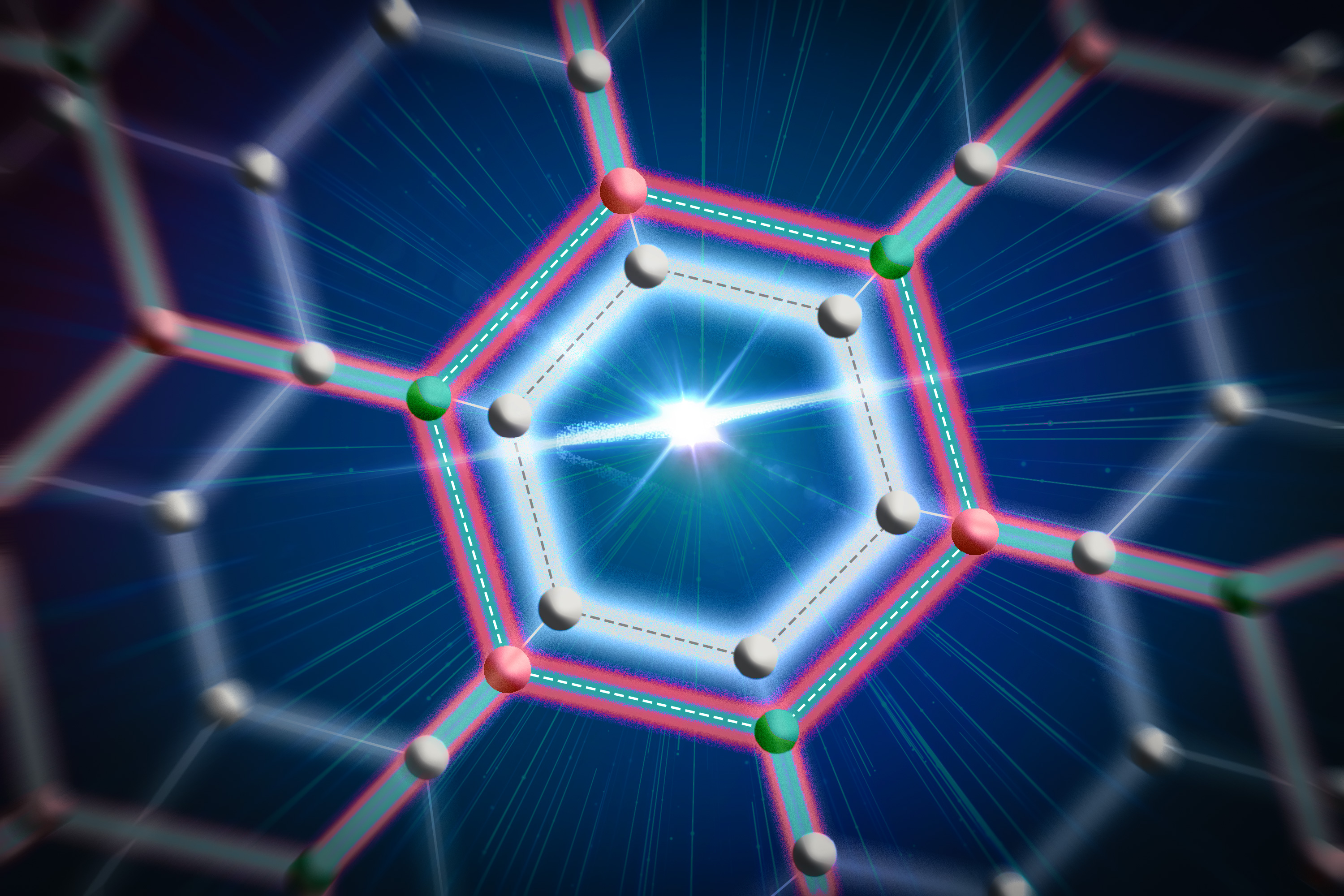
  • Researchers at Quantum X-Labs improved superconducting qubit coherence using tantalum and silicon resonance

  • The advancement aims to enhance accuracy in predicting nuclear particle transport

  • Quantum Business Qarakal Quantum focuses on practical applications of quantum computing

  • Modular architecture allows for more efficient and scalable quantum computing

Why it matters: If you're working on nuclear particle transport prediction, the improved stability from Pangaea's modular design could mean faster, more accurate simulations. Researchers at Quantum X-Labs enhanced superconducting qubit coherence using tantalum and silicon resonance, which significantly improves qubit stability. This is a big deal for anyone pushing the boundaries of quantum computing in practical applications.

Commercialization
NVision Raises €110M for Quantum Computing Breakthroughs

Image source: www.insidequantumtechnology.com

Summary: NVision raises €110M to commercialize its quantum computing tech, promising millions of qubits per wafer. This could revolutionize the industry with unprecedented scalability and performance.

Key Points:

  • NVision has raised €110 million in funding for its quantum computing and MRI solutions.

  • The company's POLARIS technology enhances signals for MRI visibility, making molecules visible that were previously undetectable.

  • Organic molecules used by NVision have a spin lifetime of up to 5 minutes at room temperature, ideal for qubits.

  • A photonic integrated circuit embedded in the molecules adds a quantum layer with long coherence and high fidelity.

  • NVision's technology allows hundreds of thousands to millions of qubits on a single wafer, fitting an entire quantum computer into one server rack.

Why it matters: If you're working on advanced quantum computing projects, NVision's €110M funding is a game-changer. Their technology promises unprecedented scalability and performance, with the potential to fit millions of qubits in a single wafer. This could drastically reduce costs and improve accessibility for large-scale quantum applications.

New Tools & Job

  • MachineTranslation.com - MachineTranslation.com is an AI-powered translation platform that translates text and documents by comparing outputs from multiple leading AI translation models. Its consensus technology helps users choose the most accurate translation, reducing errors and improving quality across more than 330 languages. What it does Translates text and documents using AI. Compares translations from multiple AI models. Provides a consensus translation to improve accuracy. Supports 330+ languages. Helps users evaluate and refine translations. What makes it good Higher accuracy: Compares multiple AI translations instead of relying on a single model. Better quality: Consensus technology helps identify the strongest translation. Fast and easy: Delivers results in seconds with a simple interface. Broad language support: Covers over 330 languages. Useful for professionals and travelers: Suitable for business, marketing, legal, technical, and everyday communication.

  • Format Factory - Format Factory is a browser-based workbench for common audio and video conversion jobs. It supports batch processing for video and audio conversion, compression, merging, audio extraction, and audio removal, with transparent credits and temporary results. Try Format Factory for practical media conversion without installer bundles or per-file setup.

  • HappyHorse.AI - HappyHorse.AI is a multimodal AI video generator for creators, marketers, and social media teams. Users can create videos from text prompts, animate images, or generate videos from reference characters. The platform focuses on browser-based video creation and native audio support.

  • NeatScribe - NeatScribe is designed for anyone who needs to reuse information from recorded speech. It creates timestamped transcripts, supports translation, and exports results as text files, documents, subtitles, captions, or timed lyrics.

  • Sakana Marlin - Sakana Marlin is Sakana AI's first commercial product: an autonomous 'Ultra Deep Research' agent positioned as a Virtual Chief Strategy Officer. Given a research topic, Marlin works autonomously for up to roughly eight hours, forming hypotheses, gathering and reconciling information from online sources, and synthesizing a detailed strategy report up to ~100 pages plus executive-summary slides. It builds on Sakana AI research including AB-MCTS (NeurIPS 2025 Spotlight) and The AI Scientist (published in Nature). A closed beta ran from April 2026 with ~300 professionals across finance and consulting.

  • Structural Engineer - Full Vehicle Concepts - Mach Industries is seeking a Senior Structural Engineer to lead the conceptual and preliminary design of next-generation unmanned aerial systems (UAS). The role involves defining structural configurations, performing FEM modeling, driving trade studies, and mentoring junior engineers in a fast-paced defense technology environment.

  • Reliability Engineer Performance & Life-cycle Assurance - This senior-level position requires 5+ years of reliability engineering experience, preferably in aerospace/defense or high-reliability industries. The engineer will implement reliability frameworks, conduct testing, and collaborate with cross-functional teams to enhance system performance and longevity.

  • Senior Software Engineer (1783) - Collibra Inc. is seeking a Senior Software Engineer to develop and lead the implementation of new features and projects, driving technical advancements and enhancing user experiences. The role involves collaborating with cross-functional teams to prioritize enhancements, maintaining high standards for code quality, security, and performance, and ensuring scalability and maintainability of the codebase.

  • AI-Enabled Insights Lead -

  • Applied AI Engineer - Remote-first applied AI role open to anywhere in the continental US. Build LLM-powered features end to end.

QUICK HITS

Read more news here →

THAT'S A WRAP

Partner with Us

Showcase your product to our engaged community of Tech enthusiasts

Our newsletter reaches a diverse audience of tech professionals, investors, engineers, managers, and business leaders worldwide. Get in touch today.

Comments

Subscribe to join the conversation...

Be the first to comment

Want this in your inbox?

Get the daily edition delivered free every morning.

Join 2,713 builders reading daily.

Also get