🔒Meta Unifies Privacy Enforcement Across Billions of Checks Per Second With PrivacyLib
Privacy rules now ship as modules, not projects
TL;DR
Meta built PrivacyLib, a common library running inside its data system clients, performing billions of checks per second. New privacy requirements now plug in as modules, cutting rollouts from months to weeks. Teams building internal data tooling should pay attention.
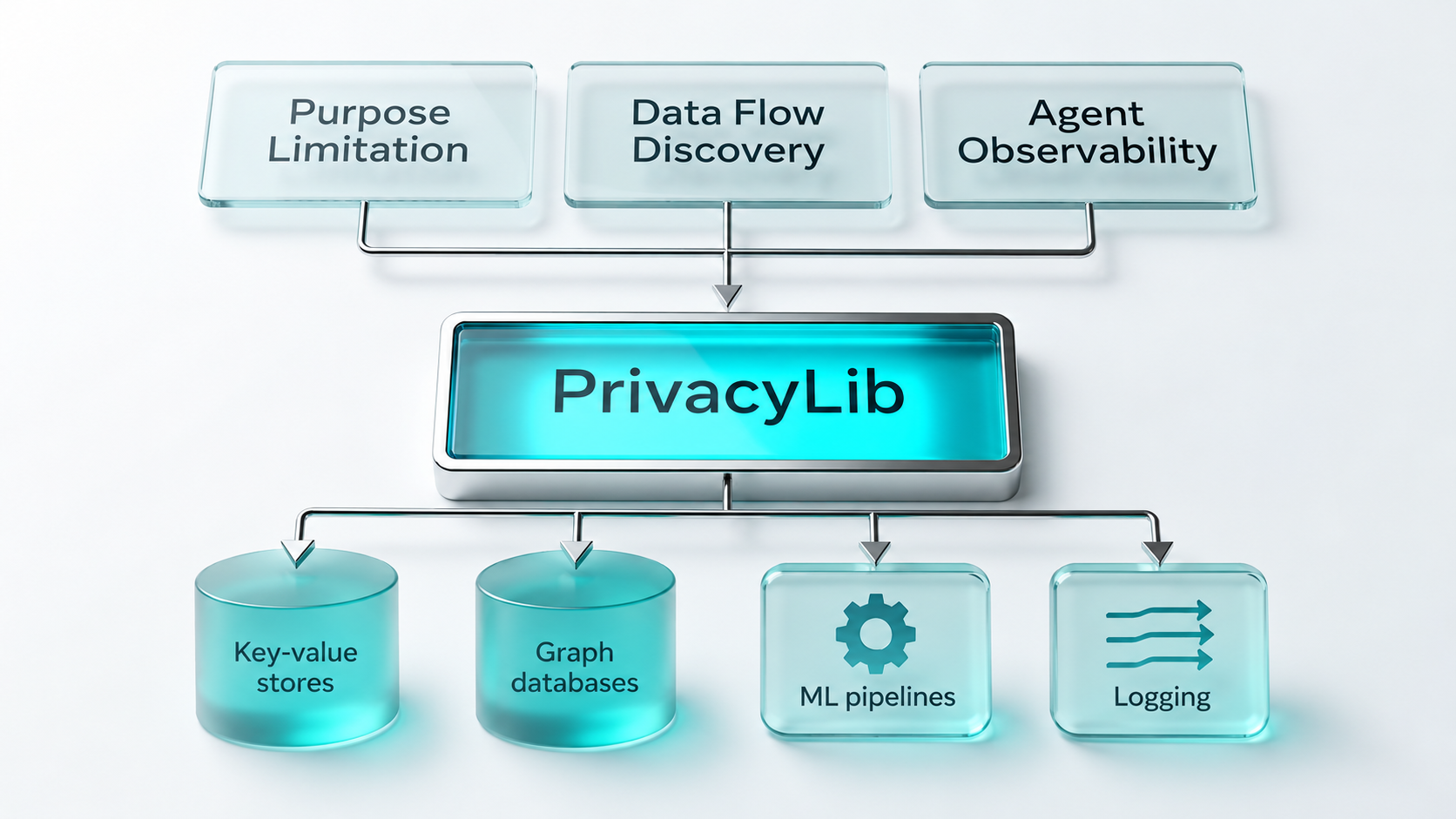
Meta just fixed the most tedious part of privacy engineering: writing the same enforcement logic in every system. PrivacyLib is a common library that runs inside the clients of Meta's data and processing systems. Each system integrates once, and new privacy capabilities arrive as modules that reuse that integration. If you build internal platforms, this is the pattern to steal. Before PrivacyLib, wiring one privacy requirement into every client took months. Now it takes weeks. The newest addition is an Agent Observability module, which watches data access from internal AI agents, with agent context propagated through tool calls on supported paths. Modules come in two flavors: Enforcing modules block access, and Observing modules only record it. The scale is the real story. PrivacyLib covers over a hundred libraries, thousands of production services, and millions of assets, performing billions of checks every second. It compiles requirements at build time and answers most checks from in-process caches, so the common path avoids a network call. Changes are simulated and rolled out per module, and each one must be testable in isolation and reversible on its own, since a fleet-wide rollback can't be the recovery plan.
Key Points
PrivacyLib covers over a hundred libraries, thousands of production services, and millions of assets across Meta's data access paths, performing billions of checks every second at peak scale.
Keep reading — it's free
Enter your email to keep reading — plus the best of AI & tech, daily. Free, forever.
Already a member? Sign in
Comments
Be the first to comment